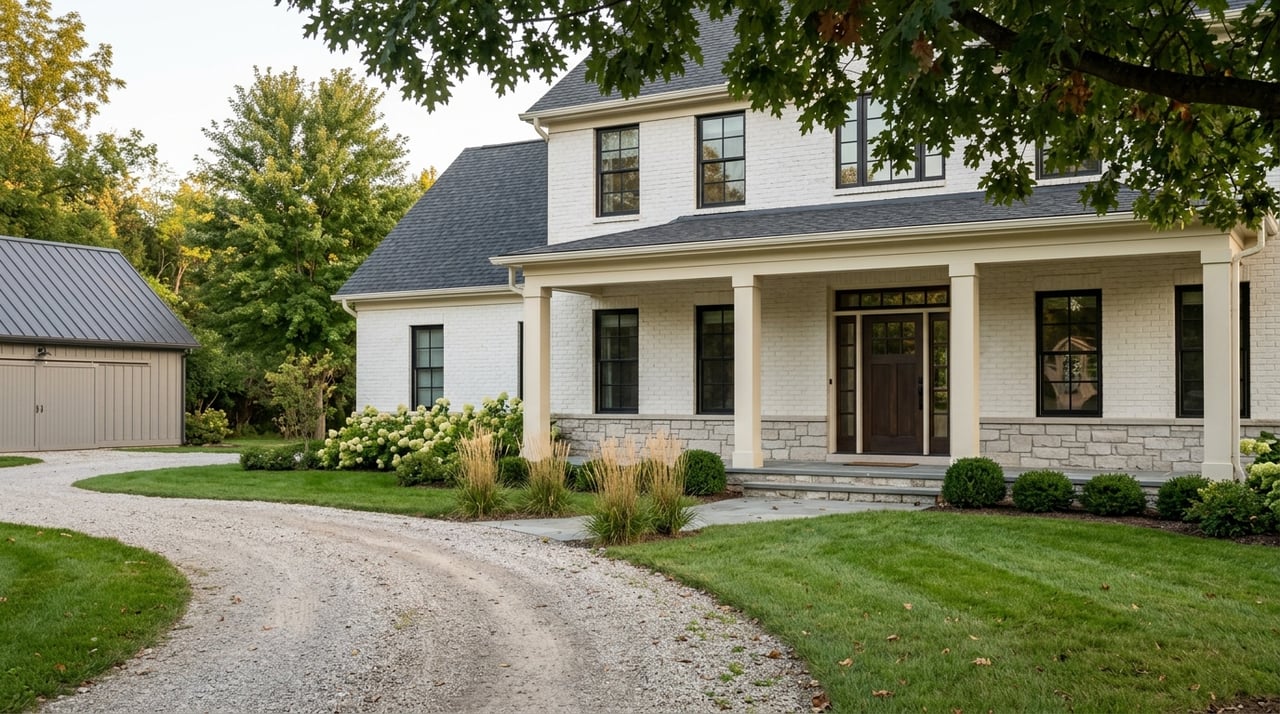
If you are dreaming about more land, more privacy, and a home that feels a little more removed from the rush, Auburn Township deserves a closer look. This is the kind of market where acreage can open up possibilities, but it also comes with more details to think through before you buy. In this guide, you will get a practical look at what makes Auburn Township appealing, what country-home buyers should expect, and where careful due diligence matters most. Let’s dive in.
Why Auburn Township Appeals to Acreage Buyers
Auburn Township is a semi-rural community in the southwest corner of Geauga County with a clear rural-residential identity. The township reports about 6,443 residents and describes itself as roughly 5 miles square, which helps explain why the area feels more open than a typical suburban market.
For many buyers, that setting is the draw. You may find larger lots, more separation between homes, and a property layout that gives you room for gardens, outbuildings, hobby space, or simply a quieter day-to-day setting.
The township’s zoning approach also reinforces that country feel. Auburn Township states that its zoning resolution is designed to preserve rural and residential areas while managing orderly growth, which is an important part of why the area continues to attract buyers who want space.
What Inventory Looks Like
One of the biggest things to understand about Auburn Township is that inventory is often limited. Live portal snapshots from spring 2026 showed a small number of homes for sale, with figures varying by site, which suggests that selection can be narrow at any given time.
That matters if you are searching for a true acreage property. Realtor.com’s land search showed 5 land listings within Auburn Township residential boundaries, while Homes.com reported 19 homes for sale with acreage. Those numbers are directional, but they support the same takeaway: when the right property comes up, you may need to move decisively.
Pricing also tends to reflect the larger-lot appeal. March 2026 portal snapshots showed Auburn Township median listing prices above the Geauga County median sale price of $376,000 reported by Redfin, which fits the pattern you often see in areas with more acreage and country-home inventory.
Why Lot Size Matters Here
In Auburn Township, lot size is not just a lifestyle feature. It is built into the local zoning framework.
In the R-1 residential district, single-family dwellings require at least 3 acres and 200 feet of lot width. In the R-2 district, the minimum is 2 acres and 175 feet of lot width. Agriculture is listed at 5 acres and 150 feet.
Those standards help explain why you see larger parcels here more often than in a standard subdivision. They also mean that if you are comparing Auburn Township to denser suburban communities, the land itself plays a much bigger role in both value and usability.
Country Homes Mean More Site Due Diligence
Acreage shopping is different from buying in a typical neighborhood. In Auburn Township, questions about wells, septic systems, soils, driveways, and drainage are often central to the purchase decision.
That is not unusual for the area. Geauga Public Health says about 70% of the county’s housing units rely on household sewage systems, and private water systems can include wells, cisterns, springs, ponds, and hauled-water storage tanks.
The practical point is simple: private systems should be treated as a normal part of ownership in this market. They are not automatically a problem, but they do require review, maintenance, and a clear understanding of how the property functions.
Septic and Well Questions to Ask
If you are considering an existing home, it helps to gather the key records early. Geauga Public Health keeps private sewage records by address and road name, and the agency notes that operation permits for home sewage treatment systems transfer to the new owner when a property sells.
You will also want to know whether the property is served by a private well and whether recent water testing is available. Geauga Public Health says water supplies must pass tests for coliform bacteria and nitrates for new systems, and well-record or alteration documents may also be worth reviewing when available.
A few smart buyer questions include:
- Is the home served by a private well and septic system?
- Are septic records available by address or road name?
- Are there operation-permit or service requirements that will transfer at closing?
- Has the water been tested recently?
- Are there well records or alteration documents to review?
These are not minor details on a country property. They are part of understanding the true condition and ongoing ownership responsibilities of the home.
Building on Land Requires More Planning
If you are buying land or planning new construction, the review process gets even more detailed. Geauga Public Health requires a lot evaluation before a new home is built.
According to the county, the site plan must show the proposed house, driveway, water well, sewage disposal system, and replacement area on a topographic plan with 2-foot contours. Soil information must come from a certified soils scientist, and after approval, new sewage and water well permits are issued.
This is one reason vacant land can look straightforward at first glance but become more complex once you start mapping out what can actually be built. A parcel’s total acreage may not match its practical buildable area.
Zoning Rules for Barns and Accessory Buildings
Many buyers looking at country homes want flexibility for extra structures. You may be thinking about a barn, detached garage, workshop, storage building, or space related to hobbies or animals.
Auburn Township does allow accessory buildings, but the rules matter. No accessory building may be placed in a front yard, and detached accessory buildings may go in side or rear yards if they are at least 15 feet from a lot line or another building on the same lot.
For buildings used for horses or livestock, Auburn Township requires at least 50 feet from any lot line unless the county health department requires otherwise. The township also states that all buildings, structures, additions, improvements, and changes of use require a zoning permit.
That means you should never assume an outbuilding is automatically permitted just because the lot is large. The zoning classification, the parcel layout, and the planned use all need to be confirmed.
Agricultural Use Can Be Different
Auburn Township’s zoning resolution includes a broad exemption for agricultural uses, including buildings or structures incident to agricultural purposes. At the same time, the resolution includes exceptions for certain platted subdivisions.
For buyers, that creates an important distinction. A parcel that appears rural may not automatically function the same way as a true agricultural parcel. If your plans include a barn, workshop, or another specialized structure, it is worth confirming exactly how the property is classified before you rely on assumptions.
If relief from the code is needed, Auburn Township says its Board of Zoning Appeals hears appeals, variances, and conditional use permits. The township also notes that zoning rules are subject to updates, so current verification is always important.
Driveways and Access Deserve Attention
On acreage properties, access can shape daily convenience more than buyers expect. Auburn Township regulates driveways, and those rules can affect layout options for new construction, secondary access points, and future improvements.
The township says no lot may have more than two driveways unless an approved development plan allows otherwise. Driveways must be 15 to 30 feet wide, spaced at least 50 feet apart, set back a minimum of 15 feet from the lot line, and kept dust-free and passable in all weather conditions.
If you are considering a long drive, private lane, or detached outbuilding with separate access, these details matter. They can influence cost, design, and how the property functions through all four seasons.
Watch for Drainage and Buildable-Area Limits
A large lot does not always mean every part of the site is equally usable. Auburn Township’s general provisions include drainage and grading rules, flood-prone area restrictions, riparian setback requirements, and water-management and sediment-control review for many additions and site disturbances.
If a parcel includes woods, creeks, ponds, or low areas, the buildable footprint may be smaller than the total acreage suggests. This is especially important when you are evaluating vacant land or planning expansions to an existing home.
In other words, acreage is only part of the story. How the land lays out and what the township allows on that specific site are just as important.
The Reality of Ongoing Maintenance
Country living often comes with more self-management. Auburn Township’s road department maintains 54 miles of roads and handles snow plowing, culvert work, ditching, asphalt patching, and roadside mowing, but it also makes clear that private roads are maintained by homeowners.
That distinction matters when you are comparing properties. A home on a private road or with a long driveway may come with extra maintenance responsibilities, especially during winter or wet-weather months.
The township also notes that township roads, county roads, state roads, and private roads are maintained by different entities. For some properties, drainage concerns, ditching, and driveway-road intersections can involve the county engineer, which is another reason access should be part of your due diligence.
Is Auburn Township Right for You?
Auburn Township can be a strong fit if you want a more open setting, larger lots, and a country-home lifestyle within Geauga County. It offers the kind of space many buyers want, but it is not a plug-and-play market.
You should expect a smaller pool of available properties, pricing that often trends above countywide benchmarks, and more diligence around zoning, septic, wells, drainage, and access. For the right buyer, those tradeoffs are worth it because the land, privacy, and flexibility can be hard to find elsewhere.
If you are exploring acreage or country homes in Auburn Township, having local guidance can make the process much clearer. The team at Smith Garofoli Group brings a practical, hands-on approach to helping buyers evaluate land, homes, and the details that matter before you move forward.
FAQs
What makes Auburn Township appealing for acreage buyers?
- Auburn Township offers a semi-rural setting, larger minimum lot sizes in many residential districts, and a zoning framework designed to preserve rural and residential character.
How competitive is the Auburn Township acreage market?
- Inventory is often limited, with spring 2026 market snapshots showing a relatively small number of homes, land listings, and acreage properties for sale at any one time.
What should buyers know about septic systems in Auburn Township?
- Many homes in Geauga County rely on household sewage systems, and buyers should review available records, operation-permit requirements, and maintenance history during due diligence.
What should buyers know about wells in Auburn Township?
- Private water systems are common in the county, so it is wise to ask for recent water test results and review any available well records or alteration documents.
Can you build a barn or accessory structure on an Auburn Township property?
- Possibly, but the answer depends on the parcel’s zoning, setbacks, and intended use, and Auburn Township states that buildings, additions, improvements, and changes of use require zoning permits.
Why do driveway and drainage rules matter for Auburn Township acreage homes?
- Driveway placement, width, spacing, weather durability, drainage, grading, and setback rules can all affect how a property is developed, improved, and maintained over time.